Monthly Archives: January 2015

Gravesend Characters Past: Augustus F. Friend (1840-1933)

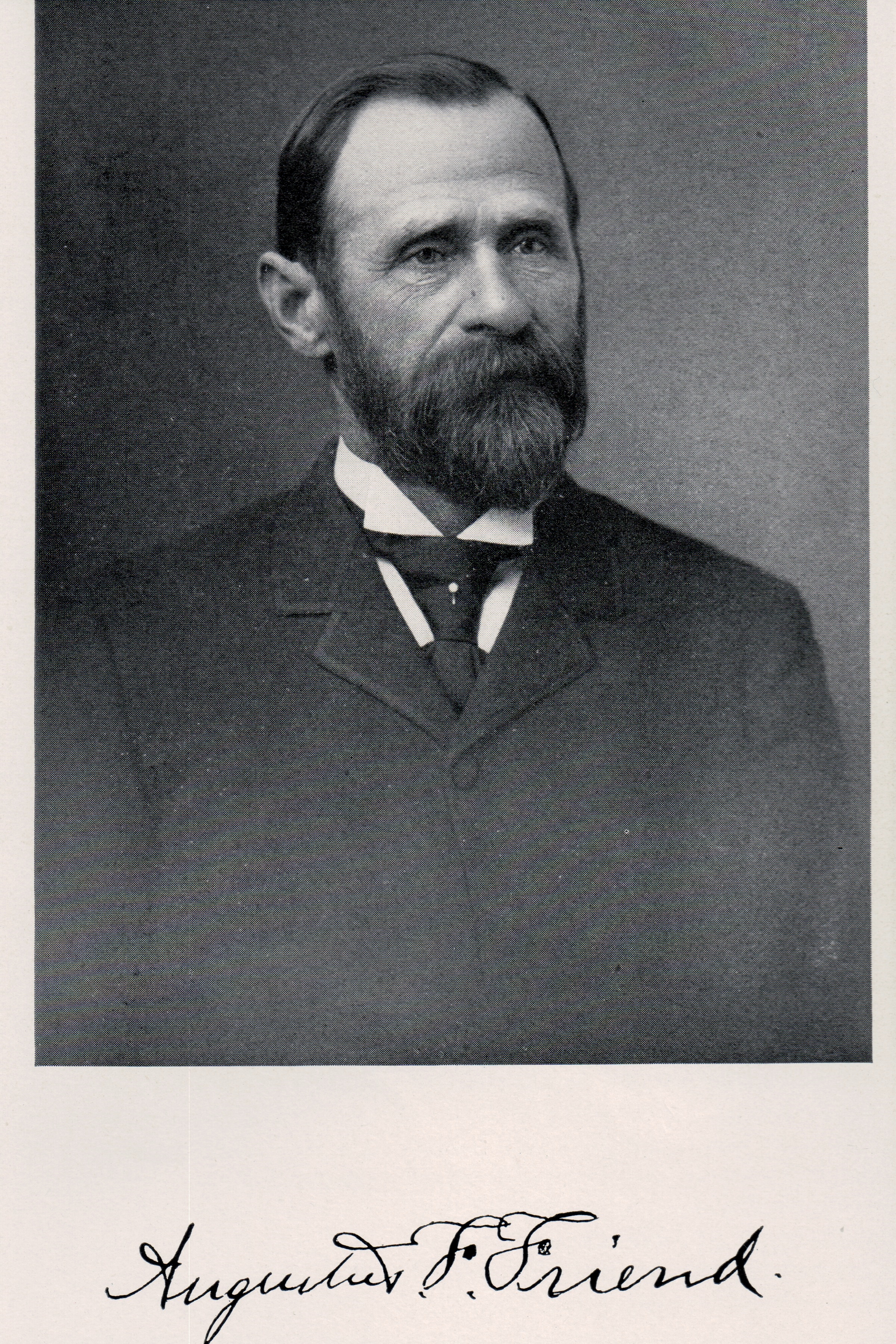
Continuing the challenge posed by my fellow members of the Society for One-Place Studies that we blog about 52 residents of our respective places in as many weeks, here is a profile of Augustus F. Friend, Gravesend blacksmith, from Peter Ross, LL. D., A History of Long Island From its Earliest Settlement to the Present Time, vol. 2 (New York: Lewis Publishing Company, 1902), 386-387:

Augustus F. Friend (1840-1933)

Augustus F. Friend (1840-1933)

In the subject of this review we find a worthy representative of the industrial interests of Gravesend and one of its popular business men. He was born at New Utrecht, Long Island, December 1, 1840, a son of John and Charlotte (Mitchell) Friend, both of whom were of German extraction. The father was born in Hesse-Cassel, Germany, in 1811, and came to America when about nineteen years of age. He was a shoemaker by trade and followed that business for a number of years in New Utrecht, and subsequently in South Brooklyn, where he removed about 1847. He efficiently filled the offices of constable and deputy sheriff while residing in New Utrecht, and for many years, both in Brooklyn and New York, acted as interpreter for the government. He died at Gravesend in 1874; his wife at New Utrecht in 1875. In their family were five children, namely: John W.; Augustus F.; Henry A.; George W.; and Charles, who died in June, 1895, at the age of fifty years.

During his boyhood Augustus F. Friend attended the public schools of South Brooklyn, and in 1858 became an apprentice to the blacksmith’s trade with Joseph H. Fleming at Flatlands, Long Island. he embarked in that business on his own responsibility at New Utrecht in 1863, and eleven years later purchased his father’s estate in Gravesend, where in 1877 he erected the commodious buildings in which he now conducts his business. Being an expert workman, as well as an upright and conscientious business man, he has built up an excellent trade.

On the 19th of September, 1864, in Brooklyn, was celebrated the marriage of Mr. Friend and Miss Augusta Newell, of that city, who died March 19, 1869, leaving one daughter, Charlotte A., who is now the wife of Charles S. Voorhees. Mr. Friend was again married, April 10, 1878, to Miss Jennie Shields, of Paterson, New Jersey, a daughter of Thomas and Lucy Shields, and by this union two daughters have been born, Bessie S. and Eleanor H.

The family are consistent and active members of the Dutch Reformed church, in which Mr. Friend has served two terms as deacon and one term as elder. He is also an active member and treasurer of Kedron Lodge, No. 803, F. & A. M. [Free & Accepted Masons], of New Utrecht, and for over thirty years has been a member of Woods Lodge, No. 121, I. O. O. F. [International Order of Odd Fellows], of New Utrecht, of which he is past noble grand.
Friend.Augustus.billhead.1898.cropped

Billhead for Augustus F. Friend, Horse Shoer, Blacksmith, Painter, Trimmer and Wheelwright, Gravesend, L.I., 1898. {Collection of Joseph Ditta.}


Copyright © 2015 by Joseph Ditta (webmaster@gravesendgazette.com)

1 Comment

Filed under Augustus F. Friend, families, Friend family, Gravesend characters, Voorhies family

Breaking News! A Gravesend Mystery Solved at Last!

“Neck Road Farm House, Brooklyn, N.Y., painted by Louis Saphier, July 1942” [Collection of Joseph Ditta]

In 2012 I wrote about a painting by Louis J. Saphier (1875-1954), which he labeled, simply, “neck road farm house Brooklyn N.Y. July 1942.” When Saphier painted this Dutch-style house, there were just four of them left along the two-mile stretch of Gravesend Neck Road:

  • No. 27: the Lady Moody-Van Sicklen, or Hicks-Platt House (the only one still standing, and, incidentally, currently for sale!)
  • No. 110: the Abraham Emmons House (demolished between 1945 and 1951)
  • No. 420 (a.k.a. 424): the Agnes Lake House (demolished between 1951 and 1956)
  • No. 1240: the Voris-Shepard House (demolished between 1945 and 1961)
The Agnes Lake House, 424 Gravesend Neck Road from Maud Esther Dilliard's Old Dutch Houses of Brooklyn (1945).

The “Victorianzied” street-facing facade of the Agnes Lake House, 420 [or 424] Gravesend Neck Road, from Maud Esther Dilliard’s Old Dutch Houses of Brooklyn (1945).

Of the four, only the Agnes Lake House — named for the lady who occupied it from birth (about 1843) to death (1932) — bore the same dimensions as the house Saphier painted: a three-bay-wide Dutch portion linked to a lower wing, with a chimney between the two. The difficulty in claiming Saphier had indeed painted the Lake House was that I had only ever seen photographs of its north, or street-facing façade, which had been modernized in the 1890s by the addition of a towered dormer. I could find no view of the rear, or south-facing side of the house for comparison. Until now.

Agnes.Lake.House

Undated view (probably 1920s) by Eugene L. Armbruster of the rear facade of the Agnes Lake House, 420 [or 424] Gravesend Neck Road, Brooklyn. [Collection of the New-York Historical Society.]

The New-York Historical Society (N-YHS) continually digitizes and makes available online its unequaled collection of photographs, including the thousands of images taken by Eugene L. Armbruster (1865-1943), who captured practically every Dutch farmhouse standing in Brooklyn during the 1920s. He shot the Agnes Lake House several times, but while he was good about captioning his prints, he was less thorough with his negatives. N-YHS has scanned these too, and among them, a friend who is obsessed with Brooklyn’s Dutch past (to the degree he bought and restored this Gravesend house) stumbled across one with the supplied title of “back garden of unidentified Dutch-style house in winter, undated.” There is, however, a telling detail which immediately identifies this as the Agnes Lake House: just next to the chimney of the small wing, poking above the roof line, one can see that unmistakable Victorian turret (circled in red on the image below). Compare, too, the shape and position of the dormer windows in the photograph with those in Saphier’s painting (outlined in blue, along with the chimney, on the images below). They match. So do the door, windows, and porch of the main wing.

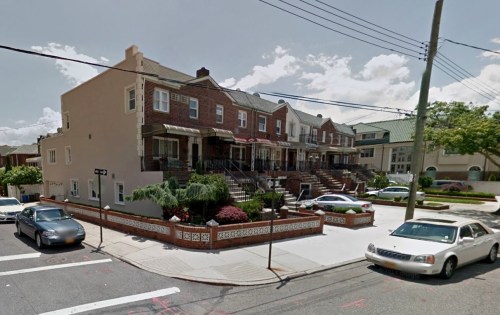
I feel confident, then, in stating that Louis Saphier’s “neck road farm house” of July 1942 was, in fact, the Agnes Lake House, which stood at 420 (or 424; the number wavered) Gravesend Neck Road between East 4th and 5th Streets. In her book Old Dutch Houses of Brooklyn, historian Maud Esther Dilliard placed its construction around 1832. Other sources suggest it was built as early as 1812. It seems to have disappeared sometime between 1951 — it is just visible in a blurry aerial view photographed that year (accessible at this link by clicking on “Map Type” and selecting “1951 Aerial”) — and 1956/57, when it was replaced by the row of seven brick houses currently standing at 410-424 Gravesend Neck Road. They were ready for occupancy on April 26, 1957.

Neck.Road.replacements.2012.June

The houses that replaced the Agnes Lake House at 410-424 Gravesend Neck Road as they appeared in June 2012. Courtesy of Google Maps (https://goo.gl/maps/S7rrB).


Copyright © 2015 by Joseph Ditta (webmaster@gravesendgazette.com)

3 Comments

Filed under Agnes Lake House, buildings, Gravesend Neck Road, Lake family, Louis Saphier, Maud Esther Dilliard

Gravesend Characters Past: Charles E. Morris (1858-1925)

Continuing the challenge posed by my fellow members of the Society for One-Place Studies that we blog about 52 residents of our respective places in as many weeks, here is a profile of Charles E. Morris from The Eagle and Brooklyn: The Record of the Progress of the Brooklyn Daily Eagle Issued in Commemoration of its Semi-Centennial and Occupancy of its New Building; Together With the History of the City of Brooklyn From its Settlement to the Present Time, edited by Henry W. B. Howard (Brooklyn, N.Y.: The Brooklyn Daily Eagle, 1893), vol. 2, 1140-1142:

SCAN0265

Charles E. Morris (1858-1925)

Filling the position of collector of the town of Gravesend, Charles E. Morris, since his election in the fall of 1891, has performed his duties in a thorough and efficient manner. Mr. Morris was born at Gravesend, on November 21, 1858. His paternal ancestors for some generations have been natives of that town, being direct descendants of the famous Gouverneur Morris. For five years young Morris attended the public school in his native town, and subsequently, public school No. 10, in Brooklyn, where he was graduated in 1876. He then became identified with the Knickerbocker Ice Company, and in a very short time was placed in charge of the business of that corporation at Coney Island. This position he retained for many years. He has been an active member of the John Y. McKane Association ever since its organization, on for the past four years he has been a delegate to the Democratic General Committee, from Gravesend. Since 1887 he has been clerk to the board of health of Gravesend, and from the beginning of 1892, of the street improvement and town boards. He was one of the commissioners appointed to superintend the grading and construction of Surf avenue. He is secretary to Atlantic Hook and Ladder Company of the Coney Island fire department, and is president of the Atlantic Gun Club.

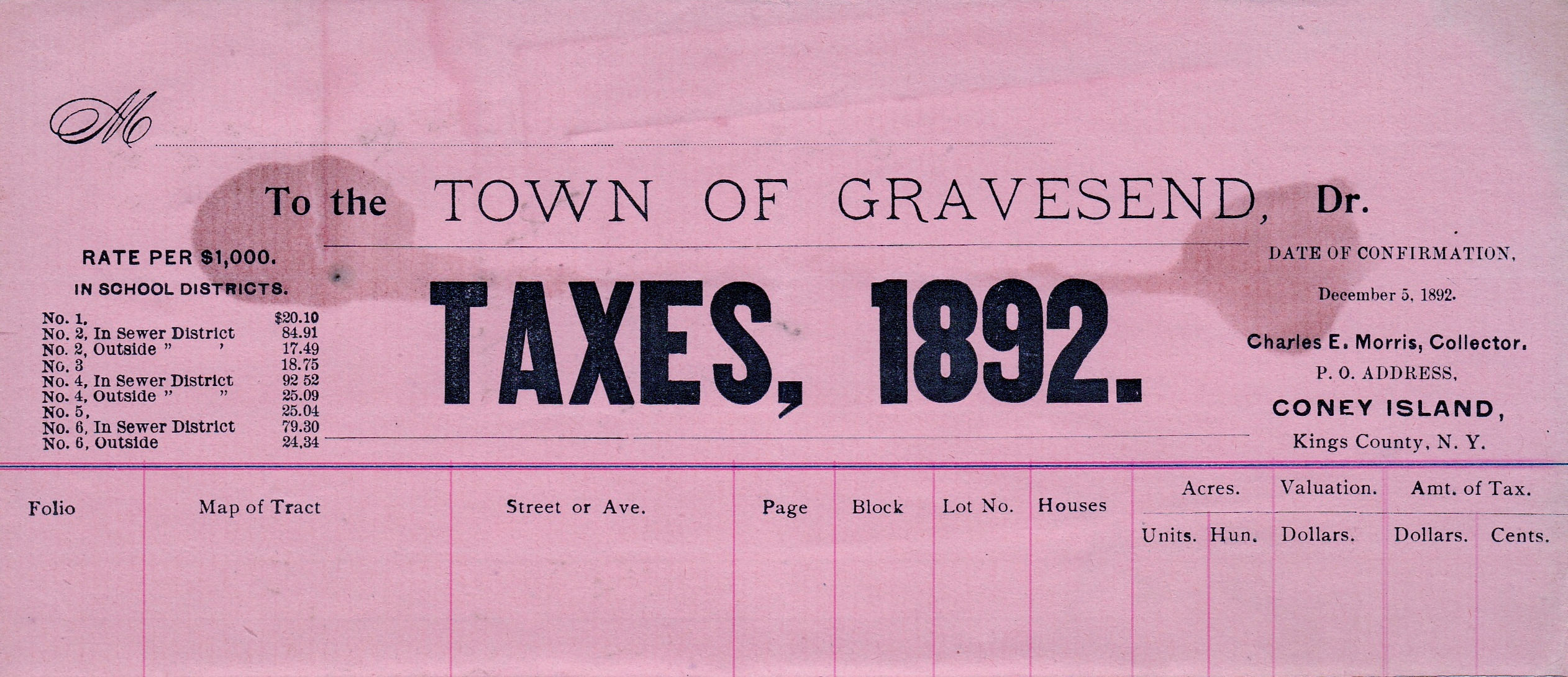
Morris.Charles.tax.billhead.1892.copy2

Billhead for Charles E. Morris, Collector of taxes, Town of Gravesend, 1892. {Collection of Joseph Ditta.}


Copyright © 2015 by Joseph Ditta (webmaster@gravesendgazette.com)

Leave a comment

January 22, 2015 · 12:01 am

Gravesend Characters Past: Ebenezer Waters, D.V.S. (1834-1908)

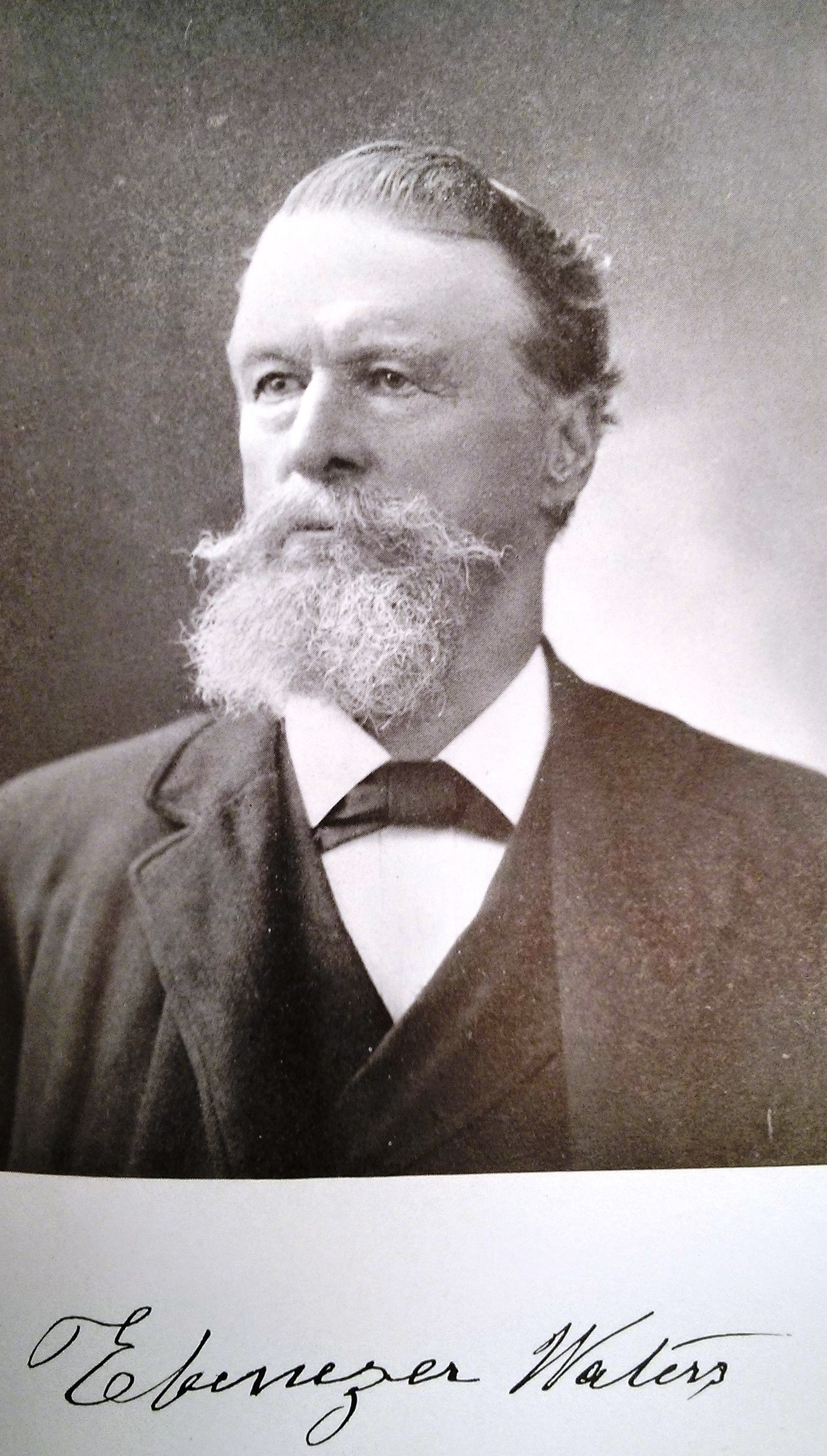
Continuing the challenge posed by my fellow members of the Society for One-Place Studies that we blog about 52 residents of our respective places in as many weeks, here is a profile of Gravesend veterinarian Ebenezer Waters transcribed from Peter Ross, A History of Long Island From its Earliest Settlement to the Present Time, vol. 3 (New York: Lewis Publishing Company, 1902), 324-325:

image

Ebenezer Waters (1834-1908)

Ebenezer Waters is a veteran veterinarian of Brooklyn and is one of the native residents of Long Island, his birth having occurred in Gravesend, Kings county, on the 2d of September, 1834. His parents were Dr. Robert and Doellinor (Lancaster) Waters, natives of London, England. The father, who was a veterinary surgeon of his native country, came to America in 1828, located at Flatlands, where he remained for two years. In 1830 he removed to Gravesend and twenty years later to New Utrecht, where he died in 1862, at the age of fifty-six years. His widow died in 1891, at the age of eighty-four years, and her mother was ninety-eight years and eleven months old at the time of her demise. In their family were nine children.

The father owned a farm of sixty acres, on what is known as Dyker Heights, and there his sons as young men were employed, but the Doctor’s time was chiefly given to assisting his father in the practice of veterinary surgery. He became his successor in business and for some time was the only veterinarian between Fort Hamilton and Jamaica. In 1871 he purchased a stable at No. 113 Ashland Place, where he has since conducted his veterinary hospital.

In 1855 Dr. Waters was united in marriage to Miss Gertrude Van Pelt of New Utrecht. By this union there were two children, who died in infancy, and the mother died in 1861. In 1864 the Doctor wedded Miss Jane Maria Van Sicklin [sic], of Coney Island, who died in 1869. They had three children, the two eldest being twins, one of whom died at the age of eight and the other at fourteen months. The surviving child is Roberta L. The Doctor was married a third time, in 1871, when Miss Mary Elizabeth Bennett, of New Utrecht, became his wife. She was a descendant of an old Long Island family, and died in September, 1896. The Doctor holds membership relations with Fortitude Lodge No. 19, F. & A. M. [Free & Accepted Masons]; Nassau Chapter, No. 109, R. A. M. [Royal Arch Masons]; and Clinton Commandery, No. 14, K. T. [Knights Templar]. He was formerly a member of the Prospect Driving Club and the Atlantic Yacht Club. In politics he has always been a stanch [sic] supporter of Democracy.


Copyright © 2015 by Joseph Ditta (webmaster@gravesendgazette.com)

Leave a comment

Filed under Bennett family, Dyker Heights, Ebenezer Waters, Van Pelt family, Van Sicklen family

Gravesend Characters Past: Gilbert Hicks (1832-1903)

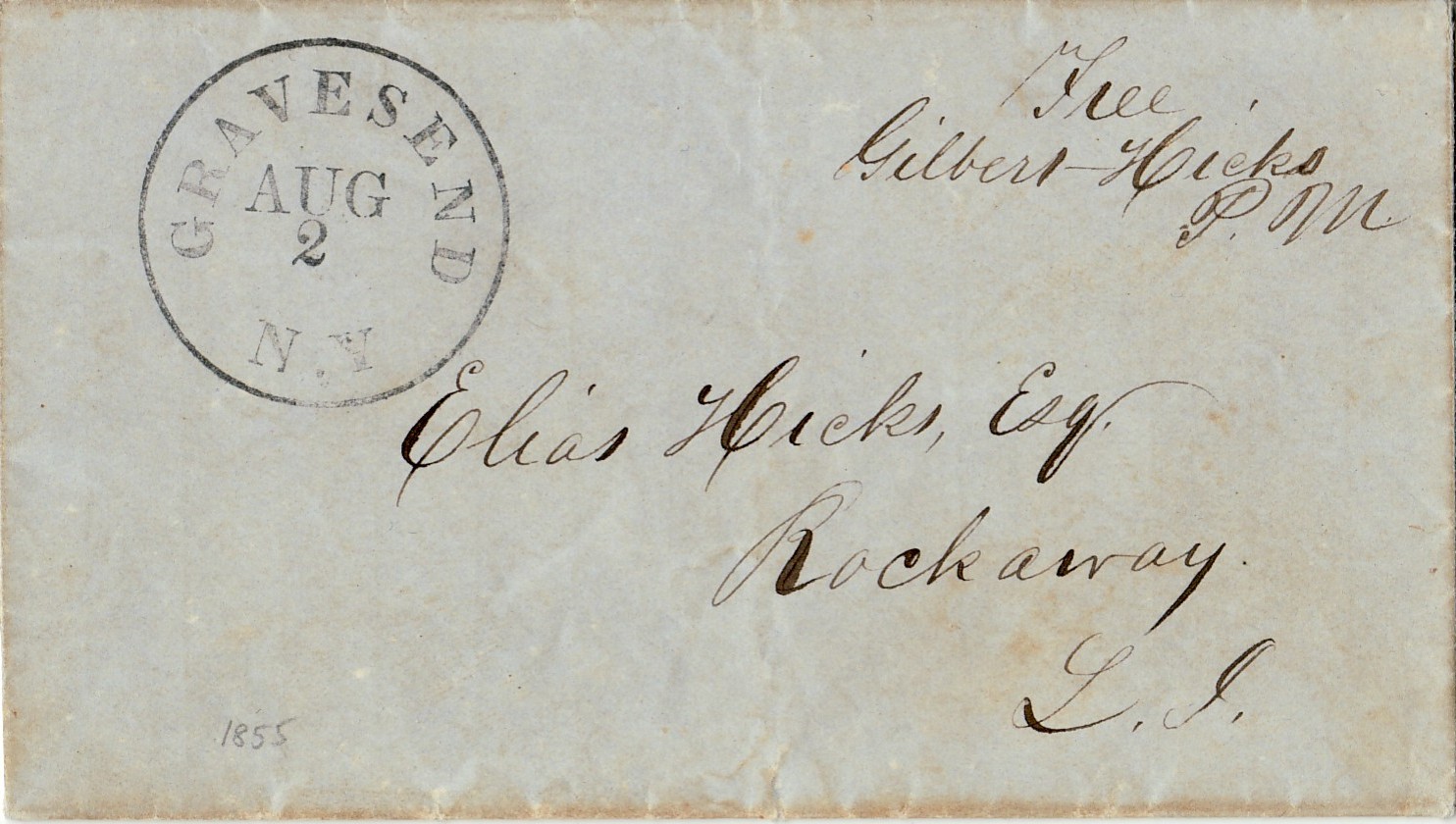
Continuing the challenge posed by my fellow members of the Society for One-Place Studies that we blog about 52 residents of our respective places in as many weeks, here is a profile of Gilbert Hicks, one of Gravesend’s early postmasters, from Peter Ross, LL. D., A History of Long Island From its Earliest Settlement to the Present Time, vol. 2 (New York: Lewis Publishing Company, 1902), 142:

The_Brooklyn_Daily_Eagle_Mon__Mar_9__1903_

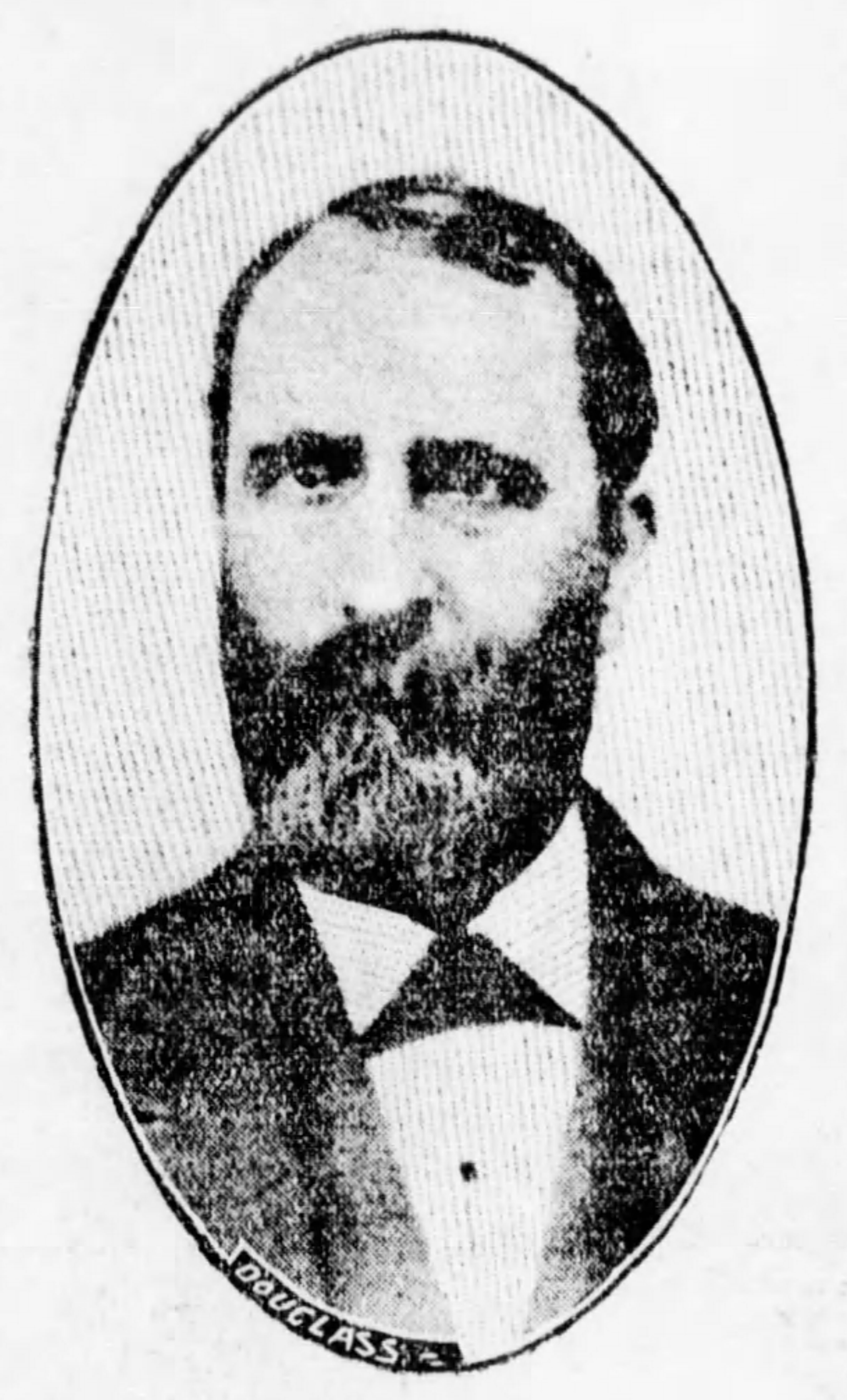
Gilbert Hicks (1832-1903). Portrait accompanying his obituary in the Brooklyn Daily Eagle, Monday 9 March 1903, p. 3, col. 4.

Gilbert Hicks, of Flatbush, was born at Norton’s Point, Coney Island, on the 6th of March, 1832, in the only house located on the island at that time. He represents a family that has long been widely known in this section of the Empire state. One of its representatives was Elias Hicks, a noted divine. Thomas Hicks, the father of our subject, was born at Newtown, Long Island, and was a son of GIlbert Hicks, Sr. The former came to Coney Island about 1828 and served as commissioner of common lands of Gravesend. He was a deacon and leader in the Dutch Refomed church at that place and was a leading and influential citizen whose active connection with public affairs proved of great benefit to the community. He married Cornelia Van Sicklen, a daughter of Abraham Van Sicklen, one of the early settlers of Gravesend. His death occurred in 1890. Four of his nine children still survive him, namely: Gilbert; Annie; Mary, widow of Abraham Voorhies, of Flatbush; and John B., who is also living in Flatbush.

Gilbert Hicks attended the local schools in Gravesend and entered upon his business career as a clerk in a store on Staten Island. He afterward occupied a similar position in Gravesend and later was appointed storekeeper at the county building, entering upon the duties of that position in 1857. He served in that capacity for thirty years, a fact which indicates his fidelity and trustworthiness.

Mr. Hicks was united in marriage to Miss Emma Abrahams, of Linnbrook [Lynbrook?], Long Island, a daughter of Zachariah Abrahams. Their marriage was blessed with four children, of whom three are now living, as follows: Nettie L., wife of Arthur Hatch, of Flatbush; Fannie, wife of Lewis Vernal, of Brooklyn; and Adelaide. In 1857 Mr. Hicks took up his residence in Flatbush and has been a promoter of many of its interests that have proved of public benefit. He is a Democrat in politics, and at one time was quite active in the work of the party. For many years he has been a Mason and has long served as an elder and deacon in the Dutch Reformed church at Flatbush, of which he is an esteemed and valued member.

Letter from Gilbert Hicks to Elias Hicks, postmarked Gravesend, 2 August 1855 (Collection of Joseph Ditta)

Letter from Gilbert Hicks, as postmaster of Gravesend, to his uncle, Elias Hicks, postmarked, 2 August 1855. (Collection of Joseph Ditta)


Copyright © 2015 by Joseph Ditta (webmaster@gravesendgazette.com)

1 Comment

Filed under Gilbert Hicks, Gravesend characters, Hicks family, Van Sicklen family