Category Archives: localities

Der Koloss Elefant auf Coney Island

Most of you know of (and kindly indulge) my obsession for Elephantine Colossus, the giant tin-skinned, elephant-shaped structure that stood on Coney Island between 1884 and 1896. Here’s my latest find, which arrived today all the way from Germany (you’ve got to love eBay!). It’s a page from the Illustrirte Zeitung [or Illustrated News] for August 1, 1885, showing our Elephant in head-on and X-ray views. These are the same images that accompanied a Scientific American feature a month earlier. If anyone reads German, I’d love to have a translation of the article in the left column — “Der Koloss von Coney-Island” — though I suspect it’s the same recitation of hyperbolic statistics that followed the Elephant wherever he went!

"Der Koloss von Coney-Island," Illustrirte Zeitung, August 1, 1885, p. 119. [Collection of Joseph Ditta]

“Der Koloss von Coney-Island,” Illustrirte Zeitung, August 1, 1885, p. 119. [Collection of Joseph Ditta]

Scientific.American.1885.07.11

“The Colossal Elephant of Coney Island,” Scientific American, July 11, 1885. [Collection of Joseph Ditta]


Copyright © 2016 by Joseph Ditta (webmaster@gravesendgazette.com)

Leave a comment

Filed under Coney Island, Elephantine Colossus

1601 Avenue T

Here’s a rare postcard view (actually, it’s probably unique) of the house at 1601 Avenue T, at the northeast corner of East 16th Street, next to a 2015 shot of the house by Lisanne Anderson. It was built early in the twentieth century as part of the real estate development called Homecrest. The house retains its basic shape despite the changes to its skin over the last hundred years. Its immediate neighbor at 1607 Avenue T has fared less well.


Copyright © 2016 by Joseph Ditta (webmaster@gravesendgazette.com)

Leave a comment

Filed under Avenue T, Homecrest

Don’t Blink!

Happy New Year! I think I’ll start sharing more images from my ever-growing collection of Gravesendiana because, well, everyone loves a good picture, right? I’ll put them up and let them speak for themselves. If the mood strikes me, and if time is on my side, I can always go into detail. But to make life easier — and to keep you interested, hopefully! — I’ll try to post more frequently and simply. And please remember: your comments are always welcome!

Here is the last purchase I made in 2015. It arrived, nicely, on January 2nd. It is a postcard, mailed on October 9, 1908, by Anna Studwell, of 1634 West 2nd Street, between Avenues P and Q (Avenue Q had not yet been renamed Quentin Road) in the now-forgotten real estate development of “Marlboro” (misspelled “Marboro” in red ink on the front of the card, just like the lost Marboro Theatre on Bay Parkway, which many of you will remember). She invites a friend or family member from Manhattan to come out to see the house with these simple directions: “Take Culver train [today’s F line] and get off Ave. P. Walk west, you will see house.” In 1908, there was little else to see on the largely empty blocks of Marlboro.

Although its skin had been modernized over the years, the house remained largely the same (it was rather plain to begin with). It stood until last fall, when it was demolished to build a mini-mansion on the site. I didn’t want this to be a sad post, but hope it serves as a reminder to keep your eyes peeled before every last scrap of Gravesend history disappears before we know it.


Copyright © 2016 by Joseph Ditta (webmaster@gravesendgazette.com)

2 Comments

Filed under Marlboro, West 2nd Street

The Fiery End of Gerritsen’s Mill

If I share this story you might think me guilty by association, especially since I’m Gravesend’s self-elected cheerleader, but the crime happened eighty years ago today, so I should be safe.

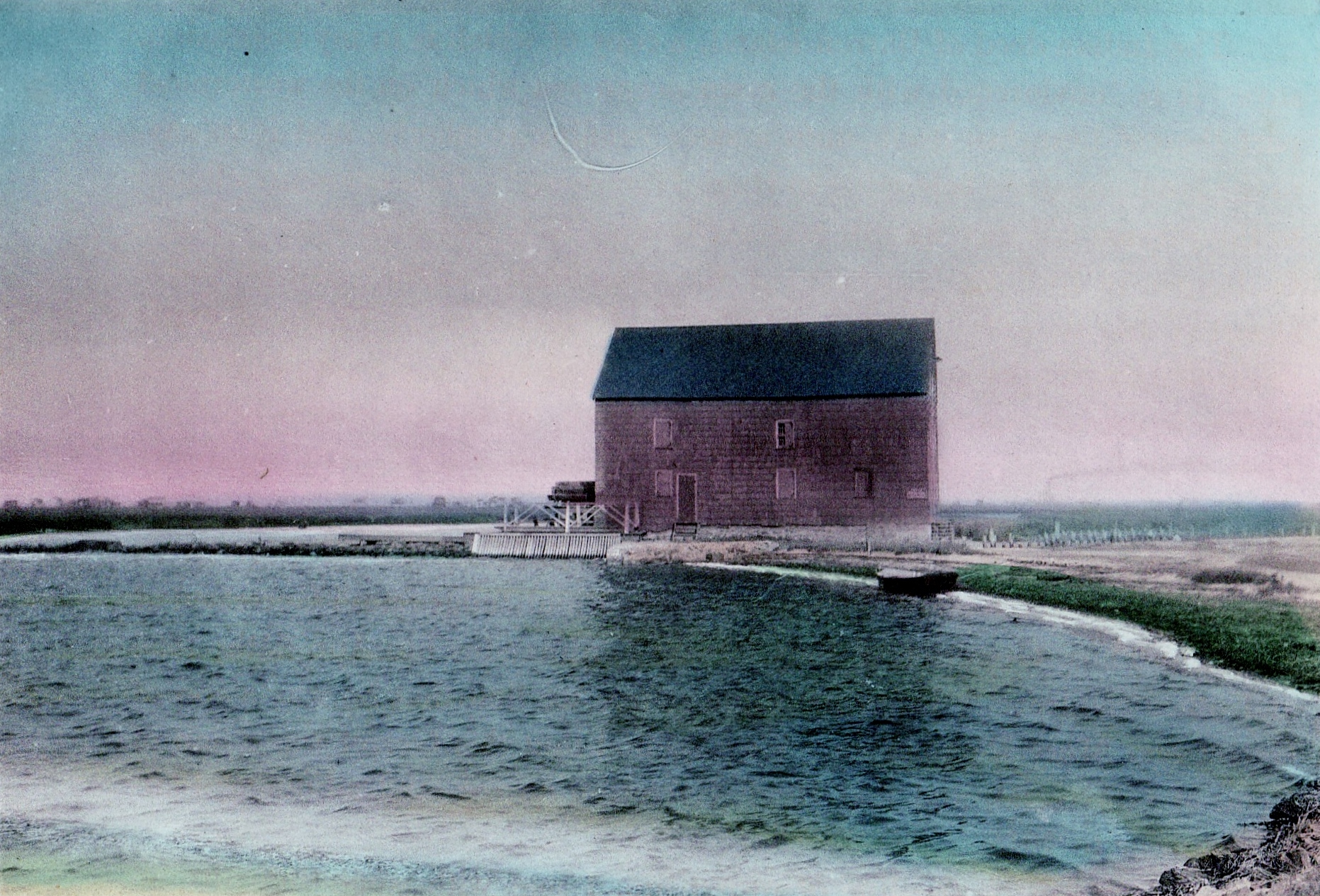
“Gerretsen’s [sic] Mill at Gravesend,” image from Charles Andrew Ditmas, Historic Homesteads of Kings County (1909).

When I began to research Gravesend history seriously about twenty-five years ago, I showed my late granduncle some book or other of old Brooklyn photographs. He was well over seventy then and enjoyed recalling the Brooklyn he moved to as a teenager from Manhattan, around 1932, with his parents, five brothers, and only sister (my grandmother). Thumbing through the pictures, he stopped at one of Gerritsen’s Mill, as rickety a building as ever there was. It stood on the west bank of the Strome Kill (Dutch for “storm creek”), also called Gerritsen’s Creek, the tidal inlet that formed a natural boundary between the historic towns of Flatlands and Gravesend. The creek survives in truncated form south of Avenue U in Marine Park, but the mill is gone.

Uncle Frank wore his bifocals oddly, with the tops tilted way forward. He lifted his head back to see me through the bottoms of his lenses and said, matter-of-fact, “You know, I burned that thing.” My jaw dropped.

When we think of the Netherlands we conjure up tulips and windmills. But the Dutch who settled western Long Island did not use windmills to grind grain. Instead they built dams across the tidal creeks that fringed the marshy coastline. As the tide flowed in the water level rose behind the dam. When the tide ebbed, the receding water forced the flood gates shut. The trapped reservoir, or mill pond, could then be channeled as needed over a paddle wheel to turn the gears and grindstones inside an adjacent mill.

Hugh Gerritsen owned land at the Strome Kill before 1645. But while it is believed that the Gerritsen clan first operated their tide mill that long ago, the first definite, historical reference we have to its existence is in the 1765 will of Johannes Gerritsen, who bequeathed it to his son, Samuel. Legend has it that during the Revolution, Samuel, rather than grind grain for the Hessians, submerged his millstones in the creek. Forced at bayonet point to retrieve them, he unwillingly served the enemy for the duration of the war.

The historians Charles Andrew Ditmas (1909) and Maud Esther Dilliard (1945) have detailed the genealogy of the Gerritsen property and its long-running mill, which fed Gravesend and the surrounding towns into the 1890s. It passed in 1899 to William C. Whitney, former United States Secretary of the Navy during Grover Cleveland’s first presidency (1885-1889). Whitney’s son, Harry Payne Whitney, trained racehorses on the grounds. The Coney Island Jockey Club’s track at Sheepshead Bay was quite near.

By the early twentieth century the abandoned mill had become a picturesque backdrop for the sightseers who posed for photos in front of it, and, sadly, a destination for souvenir hunters who took away pieces of history in the form of nails and bits of timber. When the City finally acquired the Gerritsen-Whitney property to create Marine Park in 1925, the mill was a wreck. Preservationists called it the oldest surviving tide mill in the country. “It is a sacrilege for our generation to allow this relic of Revolutionary days to crumble into ruin,” cried Gertrude Ryder Bennett to the editor of the Brooklyn Eagle on Wednesday, June 24, 1931.

The City listened. A fence went up around it to keep what remained of the mill intact. Plans were drawn — see “Gerritsen Mill, Old Landmark, To Be Rebuilt” in the Brooklyn Eagle, August 26, 1934 — and the exterior carefully restored. But then, on September 4, 1935 — tragedy. An early-morning fire destroyed the ancient building. The cause of the blaze was never determined. Some have speculated that it was set by a disgruntled employee of “master builder” Robert Moses.

The charred remains of Gerritsen's Mill. Photograph from the Brooklyn Eagle, September 4, 1935, p. 13.

The charred remains of Gerritsen’s Mill. Photograph from the Brooklyn Eagle, Wednesday, September 4, 1935, p. 13.

Do I believe my uncle really had a hand in it?  Who can say? He had no reason to invent such a tale. Back then, he was nineteen years old and had a bit of a wild streak in him. (When the family still lived in Manhattan, he was off one day on a bicycle ride. He got struck by a car and landed in the hospital. This happened just when they were poised to move to a new apartment on the opposite side of Thompson Street. No one knew where he was, so the move happened without him. Somehow, he got out of the hospital and made it home, only to find that home had left him behind.) He could very well have been in Marine Park, goofing off with friends in the tall, dry grass. A single spark from a match — flicked deliberately or not — would have been enough.

An abandoned grindstone, very likely from Gerritsen’s Mill, survives somewhere in the marshy reaches of Marine Park. And the mill’s foundation, along with the pilings that formed its dam, remain visible at low tide. These traces, and two relics — a hand-forged iron nail and a wooden peg — preserved by someone who picked them from the ruins and fixed them in a shadowbox, are all that is left of Brooklyn’s first industrial plant.

[Be sure to read Thomas Campanella’s haunting essay on this vanished landscape, “The Lost Creek.”]


Copyright © 2015 by Joseph Ditta (webmaster@gravesendgazette.com)

2 Comments

Filed under Charles Andrew Ditmas, Gerritsen family, Marine Park, Maud Esther Dilliard, racetracks, Sheepshead Bay

Gravesend Characters Past: Alexander Ganiard (1836-1904)

Continuing the challenge posed by my fellow members of the Society for One-Place Studies that we blog about the residents of our respective places, I turn my attention this time to letter carrier Alexander A. Ganiard and his pony, “Babe.” Credit for the discovery of this true pair of Gravesend characters goes to my friend, the talented artist, Steve Bialik.

The Brooklyn Daily Eagle, Saturday 22 May 1897, p. 5, col. 6:

GANIARD AND HIS PONY.

A Veteran Letter Carrier, Who is the Pioneer of the Present System of Postal Wagons.

Ganiard.1897

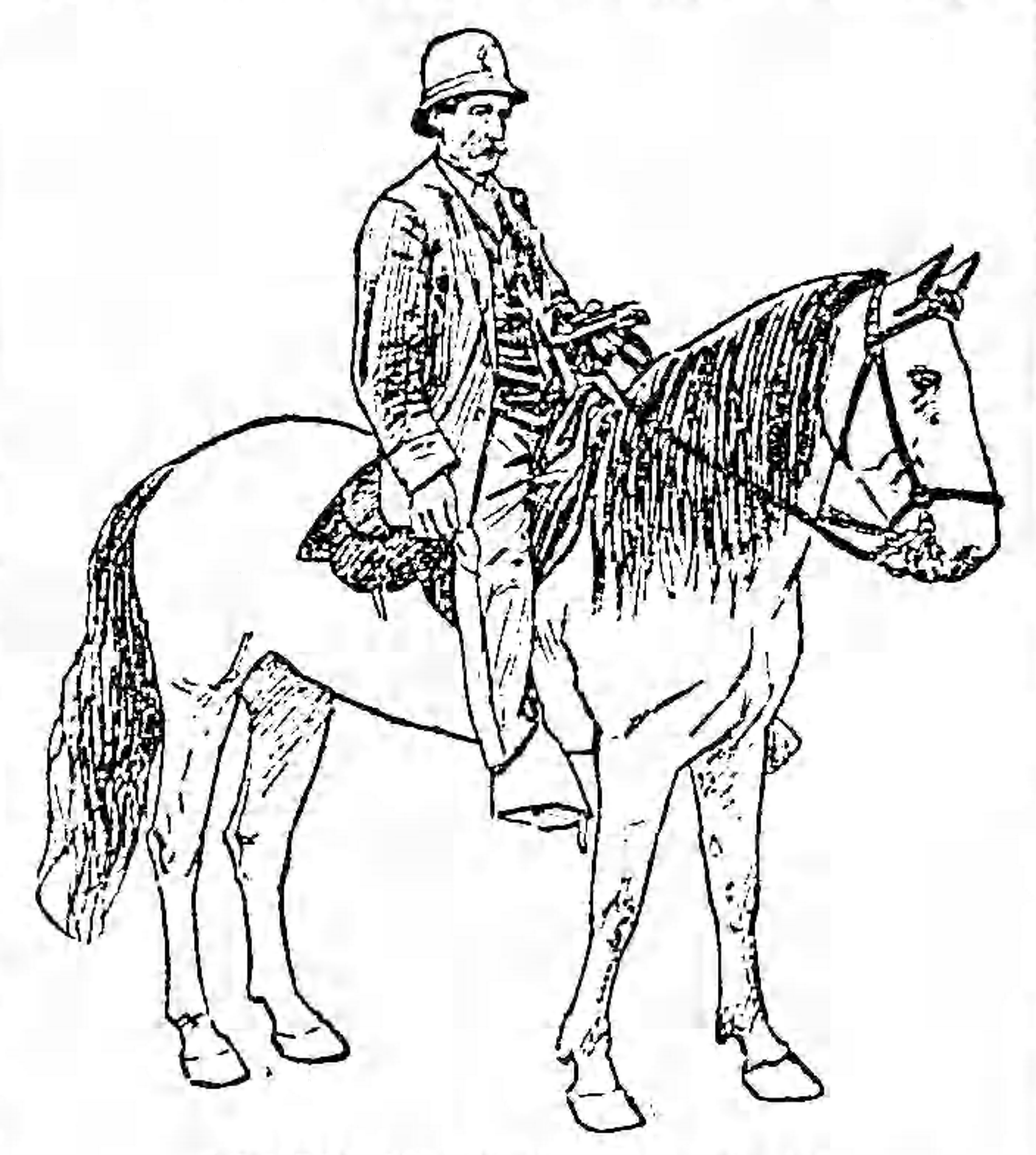
Alexander A. Ganiard (1836-1904) astride “Babe.” Click here to read Ganiard’s obituary in the Brooklyn Daily Eagle of Monday 11 January 1904.

The question as to the best way to deliver mail to the families who reside in the remote sections of the suburbs has been a topic for discussion among letter carriers in the new wards ever since their annexation. [Note: Gravesend became the 31st ward of the City of Brooklyn on 3 May 1894.] The regulation carrier’s wagon has given satisfaction in nearly all instances when put to the test, but Alexander A. Ganiard, a veteran carrier attached to Station H, at Bath Beach, has found that running his route on horse back beats anything he has yet tried. His district lies between Bensonhurst and Coney Island creek, including what were formerly the villages of Unionville and Gravesend beach, and the West Meadows. The houses are in many instances far apart and quite a few are so situated that it is impossible to get up to them in a wagon. On the West Meadows before Aleck, as the mounted carrier is called, secured his pony, it was necessary for him to leave his wagon standing a considerable distance away from the settlement while he delivered the letters to the inhabitants of the place on foot. Babe, his pony, walks through water, brush[,] and, in fact, almost anything, and carries Aleck right up to the front door of nearly all the houses.

Ganiard and his pony are now familiar figures in the Bath Beach and Bensonhurst sections. Both have many friends and Babe is particularly well liked by the children. Letter Carrier Ganiard was born in Rochester and is 61 years old. He has been in the Brooklyn postal service for twenty years and has an excellent record. He is a war veteran, having served three years in Battery L, New York First artillery, as quartermaster. He was the first carrier to use a wagon for delivering mail in Brooklyn. It was a little over nine years ago and Joseph C. Hendrix was postmaster at the time. Babe, Ganiard’s pony, was formerly the property of Buffalo Bill. The animal is gray in color, 7 years old, 14 1/2 hands high and weighs about 900 pounds. When Ganiard first got him Babe was very wild and he has not got over it yet. It takes a pretty good man to ride him. Babe frequently runs away, but never does any damage and always ends up at the stable door.

Superintendent H.G. Buckley of station H says that Aleck and his pony do the best work imaginable and he also believes that the horseback delivery is the best yet tried for that particular section of the suburbs.

West.Meadows.cropped

Undated pen and ink sketch signed “Cook” of a “Scene between Coney Island and Bensonhurst, Long Island,” showing the marshy West Meadows traversed by Ganiard and Babe. [Collection of Joseph Ditta]


Copyright © 2015 by Joseph Ditta (webmaster@gravesendgazette.com)

Leave a comment

Filed under Alexander Ganiard, Gravesend Beach, Gravesend characters, postal history